

Maronites
| الموارنة | |
|---|---|
| Flag of the Maronites
Flag of the Maronites
| |
| Total population | |
| c. 7–12 million[1] | |
| Regions with significant populations | |
| Lebanon 1.4 million (2006)[2] | |
| Brazil | 3–4 million (incl. ancestry)[3] |
| United States | 1.2 million (incl. ancestry)[3] |
| Argentina | 764,115[4] |
| France | 285,520[5] |
| Mexico | 167,190[4] |
| Australia | 161,370[4] |
| Canada | 96,100[4] |
| Syria | 50,000–60,000[4] |
| Venezuela | 25,000[6] |
| South Africa | 20,000[7] |
| Cyprus | 13,170[4] |
| Israel | 10,000[4] |
| Egypt | 6,350[8][4] |
| Nigeria | 5,850[9] |
| Germany | 5,400[6] |
| UK | 5,300[6] |
| Colombia | 5,050[6] |
| Belgium | 3,400[6] |
| Côte d'Ivoire | 2,250–3,000[9] |
| Italy | 2,500[6] |
| Sweden | 2,470[6] |
| Switzerland | 2,000[6] |
| Jordan | 1,000–1,500[4] |
| Jerusalem and Palestine | 513[4] |
| Languages | |
| Vernacular: Arabic[10] (Levantine Arabic, Cypriot Arabic[11]), Aramaic[12] (Neo-Aramaic, Lebanese Aramaic (historical))[13][14] Liturgical: Classical Syriac[15][16] and Classical Arabic[17] | |
| Religion | |
| Maronite Catholicism | |
| Related ethnic groups | |
| Other Lebanese Christians[18] | |
.svg)
Maronites (Arabic: الموارنة, romanized: Al-Mawārinah; Syriac: ܡܖ̈ܘܢܝܐ, romanized: Mārōnōye) are a Syriac Christian ethnoreligious group[19] native to the Eastern Mediterranean and the Levant (particularly Lebanon) whose members belong to the Maronite Church. The largest concentration has traditionally resided near Mount Lebanon in modern Lebanon.[20] The Maronite Church is an Eastern Catholic sui iuris particular church in full communion with the pope and the rest of the Catholic Church.[21][22]
The Maronites derive their name from Saint Maron (350–410 AD), a monk whose teachings spread throughout the Northern Levant becoming the basis of the Maronite tradition. The spread of Christianity was very slow in the Lebanese region; in the 5th century AD in the highlands they were still pagan. St. Maron sent the apostle Abraham of Cyrrhus known as the "Apostle of Lebanon" with a mandate to convert the pagan inhabitants of Mount Lebanon to Christianity. After their conversion, the inhabitants of the region renamed the Adonis River to the Abrahamic River in honor of the Saint who preached there.[23][24]
The early Maronites were Hellenized Semites who spoke Greek and Syriac,[25] yet identified with the Greek-speaking populace of Constantinople and Antioch.[26] They were able to maintain an independent status in Mount Lebanon and its coastline after the Muslim conquest of the Levant, keeping their Christian religion, and even their distinct Lebanese Aramaic[27] as late as the 19th century.[28] While Maronites identify primarily as native Lebanese of Maronite origin, many identify as descendants of Phoenicians. Some Maronites argue that they are of Mardaite ancestry, while other historians, such as Clement Joseph David, the Syriac Catholic Archbishop of Damascus, reject this.[29][30]
Mass emigration to the Americas at the outset of the 20th century, famine during World War I that killed an estimated one third to one half of the population, the 1860 Mount Lebanon conflict and the Lebanese Civil War between 1975 and 1990 greatly decreased their numbers in the Levant; however Maronites today form more than one quarter of the total population of modern-day Lebanon. Though concentrated in Lebanon, Maronites also show presence in the neighboring Levant, as well as a significant part in the Lebanese diaspora in the Americas, Europe, Australia, and Africa.
The Maronite Church, under the patriarch of Antioch, has branches in nearly all countries where Maronite Christian communities live, in both the Levant and the Lebanese diaspora.
The Maronites and the Druze founded modern Lebanon in Ottoman Lebanon in the early 18th century, through the ruling and social system known as the "Maronite-Druze dualism" in the Ottoman Mount Lebanon Mutasarrifate.[31] All Lebanese presidents, with the exception of Charles Debbas and Petro Trad, have been Maronites as part of a continued tradition of the National Pact, by which the prime minister has historically been a Sunni Muslim and the speaker of the National Assembly has historically been a Shi'ite.
Etymology
Maronites derive their name from Maron, a 4th-century Syriac Christian saint venerated by multiple Christian traditions. He is often conflated with John Maron, the first Maronite Patriarch, who ruled 685–707.[32][33]
History
Antiquity
Although Christianity existed in Roman Phoenice since the time of the Apostles, Christians were a minority among the majority pagans by the time Emperor Theodosius I issued The Edict of Thessalonica in 380 AD. The coastal cities of Tyre and Sidon remained prosperous during Roman rule, but Phoenicia had ceased to be the maritime power centre it had once been centuries ago and the north of Berytus (Beirut) and the mountains of Lebanon concentrated a big part of the intellectual and religious activities. Very few Roman temples were built in the coastal cities, hence the reason for the reign of paganism in the interior of the land.[34]
The Maronite movement reached Lebanon when in 402 AD Saint Maron's first disciple, Abraham of Cyrrhus, who was called the Apostle of Lebanon, realized that there were many non-Christians in Lebanon and so he set out to convert the Phoenician inhabitants of the coastal lines and mountains of Lebanon, introducing them to the way of Saint Maron.[35] In 451 AD, the Maronites followed the Council of Chalcedon, rejecting both monophysitism and miaphysitism in favor of maintaining full communion with the majority of Christian churches in the Roman Empire. This conflict is thought to have resulted, among other things, in a massacre of 350 monks from the monastery of Maron in 517 AD, though the person who gave the order (some accuse the Monophysite Emperor Anastasius I, others the Miaphysite Severus of Antioch and Peter of Apamea) and the event itself have been debated.[36]
Following the Muslim conquest of the Levant in 637 AD, the Christians living in the low lands and coastal cities began to settle in the Mount Lebanon area and to those coastal cities which did not particularly interest the Muslim Arabs; the area consisting of those regions extending from Sidon in the South and to Batroun and the south of Tripoli in the north. The Arab conquerors settled in various cities of the coast to reduce Byzantine interference even though they were not interested in maritime trade. Since the mountains offered no attraction to them, the Christians continued to settle in the Mountains of Lebanon.[37][38] The Christians that chose to remain in the newly Arab-controlled areas and inhabited by the Arab invaders gradually became a minority and many of those converted to Islam in order to escape taxation and to further their own political and professional advancement.[37]
Middle Ages
In 685 AD, St. John Maron became the first Patriarch of the Maronite Church. The appointing of a Patriarch made the Byzantine Emperor furious, which led to the persecution of the Maronites by the Byzantines. Following the Byzantine persecutions in the Orontes Valley, many Maronite monks left their lands in the Orontes Valley and took refuge in the mountains of Lebanon.[39] The Maronite community migrated since the mid 7th century and through the 8th century, moving from the Orontes Valley in central Syria to Mount Lebanon, becoming the majority of the Christians in the hills around Tripoli and Byblos by the 10th century.[40]
The Maronites managed then to become "civilly semiautonomous" where they settled[41] and kept speaking Lebanese Aramaic[42] in daily life and Classical Syriac for their liturgy.
The Maronites welcomed the conquering Christians of the First Crusade in 1096 AD.[43] Around the late 12th century, according to William of Tyre, the Maronites numbered 40,000 people.[44] During the several centuries of separation from the rest of the Christian world, they often claim to have been in full communion with the Catholic Church throughout.
Despite this, the majority of the accounts of those interacting with them at the time indicate that they were monothelites; notable figures from the era such as the medieval historian Jacques de Vitry and the chronicler of the Pope, William of Tyre affirming this, the latter of which (William Tyre) recorded both their kindness upon receiving him and the monothelitic views of which they recanted, stating; "The heresy of Maro and his followers is and was that in our Lord Jesus Christ, there exists and did exist from the beginning one will and one energy only, as may be learned from the sixth council, which as is well known, was assembled against them and in which they suffered sentence of condemnation. Now however...they repented all of these heresies and returned to the catholic church".[45][10] The Maronites have also had a presence in Cyprus since the early 9th century and many Maronites went there following the Sultan Saladin's successful Siege of Jerusalem in 1187 AD.[46]
Early modern period
In 1516, after the Ottomans had conquered Egypt and Syria, the areas inhabited by the Maronites became part of the Tripoli Eyalet which was placed under the authority of the governor of Damascus. Around the same time, the Maronites started reaching out to European states in order to seek a protective power, which finally resulted in France taking the role as protector of the Maronites in 1649.[47][48] During the papacy of Pope Gregory XIII (1572–1585), steps were taken to bring the Maronites still closer to Rome. The Pontifical Maronite College (Pontificio Collegio dei Maroniti) was founded by Pope Gregory XIII in 1584.[49] The Lebanese Council of 1736 was a major turning point for the Maronite Church that brought the Maronites closer to the Latin Church and was the only major Maronite council in modern times to elaborate rules and canons.[50]
The relationship between the Druze and Christians has been characterized by harmony and peaceful coexistence,[51] with amicable relations between the two groups prevailing throughout history, with the exception of some periods, including 1860 Mount Lebanon civil war.[52][53] In the 19th century, thousands of Maronites were massacred by the Lebanese Druze during the 1860 conflict. According to some estimates about 11,000 Lebanese Christians (including Maronites) were killed; over 4,000 died from hunger and disease as a result of the war.[54]
After the 1860 massacres, many Maronites fled to Egypt. Antonios Bachaalany, a Maronite from Salima (Baabda district) was the first emigrant to the New World, where he reached the United States in 1854 and died there two years later.[55] The Ottoman authorities placed Lebanon in 1915 under direct military rule and abolished all privileges in Lebanon, including that of the Maronite Church. During the First World War, the French landed troops and had Lebanon fully occupied according to the secret Sykes–Picot Agreement and after the end of the war, the Maronite dream of having an independent state under French mandate was realised.[56]
Population
Lebanon
According to the Maronite church, there were approximately 1,062,000 Maronites in Lebanon in 1994, where they constitute up to 32% of the population.[57] In the aftermath of the First World War, the Maronites successfully campaigned for Greater Lebanon carved out from Mount Lebanon and neighboring areas. Under the French Mandate, and until the end of the Second World War, the Maronites gained substantial influence. Post-independence, they dominated Lebanese politics until the 1975–1990 civil war, which ended their supremacy. While the Taif Accords weakened Maronite influence, it endures alongside other dominant Lebanese communities, such as the Shiites and Sunnis.
Lebanon's constitution was intended to guarantee political representation for each of the nation's religious groups. Under the terms of an unwritten agreement known as the National Pact between the various political and religious leaders of Lebanon, the president of the country must be a Maronite Christian.[58]
Syria
There is also a small Maronite Christian community in Syria. In 2017, the Annuario Pontificio reported that 3,300 people belonged to the Archeparchy of Aleppo, 15,000 in the Archeparchy of Damascus and 45,000 in the Eparchy of Lattaquié).[59] In 2015, the BBC placed the number of Maronites in Syria at between 28,000 and 60,000.[60]
Many Maronites fled Syria due to the war, seeking refuge in Lebanon, Europe, or the Americas. The Maronite Archdiocese of Aleppo remains one of the main religious institutions, serving a community that practices the unique Syriac-Antiochene liturgical tradition, similar to their counterparts in Lebanon. However, the community has faced significant challenges due to sectarian violence and political instability. Despite these difficulties, the Maronite Church continues to play an active role in Syria, providing humanitarian aid and preserving its cultural and religious heritage.[61]
Cyprus
Maronites first migrated to Cyprus in the 8th century, and there are approximately 5,800 Maronites on the island today, the vast majority in the Republic of Cyprus.[11] The community historically spoke Cypriot Maronite Arabic,[62][63] but today Cypriot Maronites speak the Greek language, with the Cypriot government designating Cypriot Maronite Arabic as a dialect.[11]
Israel
A Maronite community of about 11,000 people lives in Israel.[64] The 2017 Annuario Pontificio reported that 10,000 people belonged to the Maronite Catholic Archeparchy of Haifa and the Holy Land and 504 people belonged to the Exarchate of Jerusalem and Palestine.[59]
Diaspora
According to various sources, the Maronite diaspora is estimated to be somewhere between 7 and 12 million individuals, much larger than the Maronite population living in their historic homelands in Lebanon, Syria, Cyprus, Israel, and Palestine.[65][66] Due to cultural and religious assimilation, especially in the Americas, many Maronites or those of Maronite descent might not identify as Maronite or are unaware of their Maronite heritage.[67][68]
According to the Annuario Pontificio, in 2020 the Eparchy of San Charbel in Buenos Aires, Argentina, had 750,000 members; in 2021 the Eparchy of Our Lady of Lebanon of São Paulo, Brazil, had 521,000 members; in 2020 the Eparchy of Saint Maron of Sydney, Australia, had 161,370 members; in 2020 the Eparchy of Saint Maron of Montreal, Canada, had 94,300 members; in 2021 the Eparchy of Our Lady of the Martyrs of Lebanon in Mexico had 167,190 members; in 2021 the Eparchy of Our Lady of Lebanon of Los Angeles in the United States had 47,480 members; in 2020 and the Eparchy of Saint Maron of Brooklyn in the United States had 23,939 members.[4]
According to the Annuario Pontificio, 51,520 people belonged to the Maronite Catholic Eparchy of Our Lady of Lebanon of Paris in 2021.[4] In Europe, some Belgian Maronites are involved in the trade of diamonds in the diamond district of Antwerp.[69]
According to the Annuario Pontificio, 74,900 belonged to the Apostolic Exarchate of West and Central Africa (Nigeria) in 2020.[4] The Diocese is centered in Ibadan, Nigeria and covers the countries of Angola, Benin, Burkina Faso, Cameroon, Central African Republic, Chad, Republic of the Congo, Democratic Republic of the Congo, Côte d'Ivoire, Equatorial Guinea, Gabon, Gambia, Ghana, Guinea, Guinea-Bissau, Liberia, Mali, Mauritania, Niger. Senegal, Sierra Leone and Togo.[70]
Role in politics
Lebanon
In 1920, Maronites played a key role in the establishment of Greater Lebanon by the French Mandate.[56][71] With only two exceptions, all Lebanese presidents have been Maronites as part of a tradition that persists as part of the National Pact, by which the Prime Minister has historically been a Sunni Muslim and the Speaker of the National Assembly has historically been a Shia Muslim.
A unique feature of the Lebanese system is the principle of "confessional distribution": all religious communities have an allotted number of deputies in the Parliament. Thirty-four seats in parliament are reserved for Maronites. The largest party is the Lebanese Forces that receives most of its support from the Maronite Christians but it also supported by other Christian sects throughout the country. It has 19 seats in parliament, 11 of them being Maronite. The Phalange Party is a Christian-based political party of Maronite majority and former militia. it holds 4 of the 128 seats in parliament, all of which are Christian. As a militia, it played a pivotal role during the Lebanese Civil War as it controlled its own Maronite canton (Marounistan) as part of the Lebanese Front. The party is also led by the Gemayel family, a notable Maronite family based in the regions of Achrafieh and Metn which carries the legacy of Pierre and Bashir Gemayel.[72]
The Free Patriotic Movement is a Christian-based political party which follows the agenda of former president Michel Aoun. It holds 17 seats of the 128 seats in Lebanon's parliament. The party has large support in Christian districts like Batroun and Jezzine. Other smaller Maronite-based parties that only receive local support include the Marada Movement, National Liberal Party and Independence Movement.
Israel and Palestine
People born into Christian families or clans who have either Aramaic heritage are considered an ethnicity separate from Israeli Arabs and since 2014 can register themselves as Arameans.[73] Many of the Christians who have applied so far for recognition as Aramean are Galilean Maronites.
In addition, some 500 Christian adherents of the Syriac Catholic Church in Israel are expected to apply for the recreated ethnic status, as well as several hundred Aramaic-speaking adherents of the Syriac Orthodox Church.[74] Though supported by Gabriel Naddaf, the move was condemned by the Greek Orthodox Patriarchate, which described it as "an attempt to divide the Palestinian minority in Israel".[75]
Religion
The Maronites belong to the Maronite Syriac Church of Antioch, an Eastern Catholic Syriac church using the Antiochian Rite, which traces its foundation to Maron, an early 4th-century Syriac monk venerated as a saint. The Maronite Church had returned to its communion with Rome since 1180 A.D., although the official view of the contemporary Maronite Church is that it had never accepted either the Monophysitic views held by their Syriac neighbours, which were condemned in the Council of Chalcedon, or the failed compromise doctrine of Monothelitism (despite overwhelming evidence to the contrary of the latter claim being found in contemporary and medieval sources, with evidence that they were staunchly Monothelites for several centuries, beginning in the early 7th century after their rejection of the sixth ecumenical council).[76][45] The Maronite Patriarch is traditionally seated in Bkerke north of Beirut.
Cultural identity
The Maronite Church belongs to the Syriac Christian tradition and to the West Syriac Rite; Classical Syriac remains the liturgical language of the Maronite Church,[77] alongside Arabic.[78]
During the 20th century most of the Maronite elite in Lebanon favored the development of a primarily Lebanese identity and its separation from the Pan-Arabist one, in favor of a policy that would bring the country closer to the Western world.[37] Some Lebanese intellectuals, mainly Maronites, theorized Phoenicianism, which asserted the descent of the Lebanese people from the Phoenicians.[79][80] Key figures of this movement were Charles Corm, Michel Chiha and Said Aql.[81] Aql and Etienne Saqr went as far as voicing anti-Arab views. In his book the Israeli writer Mordechai Nisan quoted Aql as saying; "I would cut off my right hand, and not associate myself to an Arab."[82] Aql believed in emphasizing the Phoenician legacy of Lebanon and had promoted the use of the Lebanese Arabic dialect written in a modified Latin alphabet, rather than the Arabic one. Phoenicianism is still disputed by many Arabist scholars who have on occasion tried to convince its adherents to abandon their claims as false, and to embrace and accept the Arab identity instead.[83] Since the civil war and the Taif agreement, Lebanese Phoenicianism is restricted to a small group.[81]
On an Al Jazeera special dedicated to the political Christian clans of Lebanon and their struggle for power in the 2009 election entitled, "Lebanon: The Family Business", the issue of identity was brought up on several occasions. Sami Gemayel, of the Gemayel clan, stated he did not consider himself an Arab but instead identified himself as a Syriac Christian, going on to explain that to him and many Lebanese the "acceptance" of Lebanon's "Arab identity" according to the Taif Agreement was not something that they "accepted" but instead were forced into signing through pressure. In a speech to a crowd of Kataeb supporters, Gemayel declared that he felt there was importance in Christians in Lebanon finding an identity and went on to state what he finds identification with as a Lebanese Christian, concluding with a purposeful exclusion of Arabism in the segment.[84]
Between the 19th and 20th centuries, within the Nahda and the Mahjar, many Maronite intellectuals contributed to the formation of modern Arab identity and Arab nationalism. Key figures include Naguib Azoury, Ameen Rihani and Kahlil Gibran. Youssef Bey Karam, a Maronite leader during the 19th century, in a letter to Emir Abdelkader encouraged him to liberate all Arabs from the Ottoman Empire and then establishing an Arab Union.[85][86] Maronite Deacon Soubhi Makhoul, administrator for the Maronite Exarchate in Jerusalem, said "The Maronites are Arabs, we are part of the Arab world. And although it's important to revive our language and maintain our heritage, the church is very outspoken against the campaign of these people."[87] Suleiman Frangieh, leader of the Marada Movement, has often affirmed the belonging of the Maronite community to the Arab world and the importance of its adherence to Arabism.[88]
In Israel, some members of the local Maronite community have adopted an Aramean identity and organized linguistic revitalization programs. The Aramean identity was officially recognized by the Israeli Minister of the Interior in 2014, allowing certain Christian families to register their ethnicity as "Aramean" rather than "Arab" or "Unclassified."[89] A slight majority of the Maronites in Israel identify themselves as Arabs; the Arab identity is prevalent especially among the young and among women.[90]
See also
- Christianity in Lebanon
- List of Maronites
- Maronite politics
- Maronite Christianity in Lebanon
- Syriac Christianity
From the 1913 Catholic Encyclopedia
Maronites — This article will give first the present state of the Maronite nation and Church; after which their history will be studied, with a special examination of the much discussed problem of the origin of the Church and the nation and their unvarying orthodoxy.
I. Present State of the Maronites
A. Ethnographical and Political
The Maronites (Syriac Marunôye; Arabic Mawarinah) number about 300,000 souls, distributed in Syria, Palestine, Cyprus, and Egypt. Of this number about 230,000 inhabit the Lebanon, forming nearly five-eighths of the population of that vilayet and the main constituent of the population in four out of seven kaïmakats, viz., those of Batrun, Kasrawan, Meten, and Gizzin (the Orthodox Greeks predominating in Koura, the Catholic Greeks in Tahlé, and the Druses in Shûf). They are of Syrian race, but for many centuries have spoken only Arabic, though in a dialect which must have retained many Syriac peculiarities. In the mountain districts manners are very simple, and the Maronites are occupied with tillage and cattle-grazing, or the silk industry; in the towns they are engaged in commerce. Bloody vendettas, due to family and clan rivalries, are still kept up in the mountain districts. The population increases very rapidly, and numbers of Maronites emigrate to the different provinces of the Ottoman Empire, to Europe, particularly France, to the French colonies, but most of all to the United States. The emigrants return with their fortunes made, and too often bring with them a taste for luxury and pleasure, sometimes also a decided indifference to religion which in some instances, degenerates into hostility.
For many centuries the Maronite mountaineers have been able to keep themselves half independent of the Ottoman Empire. At the opening of the nineteenth century their organization was entirely feudal. The aristocratic families — who, especially when they travelled in Europe, affected princely rank — elected the emir. The power of the Maronite emir preponderated in the Lebanon, especially when the Syrian family of Benî Shibâb forsook Islam for Christianity. The famous emir Beshîr, ostensibly a Mussulman, was really a Maronite; but after his fall the condition of the Maronites changed for the worse. A merciless struggle against the Druses, commencing in 1845, devastated the whole Lebanon. Two emirs were then created, a Maronite and a Druse, both bearing the title of Kaïmakam, and they were held responsible to the Pasha of Saïda. In 1860 the Druses, impelled by fanaticism, massacred a large number of Maronites at Damascus and in the Lebanon. As the Turkish Government looked on supinely at this process of extermination, France intervened: an expedition led by General de Beaufort d'Hautpoult restored order. In 1861 the present system, with a single governor for all the Lebanon, was inaugurated. This governor is appointed by the Turkish Government for five years. There are no more feudal rights; all are equal before the law, without distinction of race; each nation has its sheik, or mayor, who takes cognizance of communal affairs, and is a judge in the provincial council. Every Maronite between the ages of fifteen and sixty pays taxes, with the exception of the clergy, though contributions are levied on monastic property. In contrast to the rule among the other rites, the Maronite patriarch is not obliged to solicit his firman of investiture from the sultan; but, on the other hand, he is not the temporal head of his nation, and has no agent at the Sublime Porte, the Maronites being, together with the other Uniat communities, represented by the Vakeel of the Latins. Outside of the Lebanon they are entirely subject to the Turks; in these regions the bishops — e.g., the Archbishop of Beirut — must obtain their bérat, in default of which they would have no standing with the civil government, and could not sit in the provincial council.
Like the other Catholic communities of the Turkish Empire, the Maronites are under the protection of France, but in their case the protectorate is combined with more cordial relations dating from the connection between this people and the French as early as the twelfth century. This cordiality has been strengthened by numerous French interventions, from the Capitulations of Francis I to the campaign of 1861, and by the wide diffusion of the French language and French culture, thanks to the numerous establishments in the Lebanon under the direction of French missionaries — Jesuits, Lazarists, and religious women of different orders. It is impossible to foresee what changes will be wrought in the situation of the Maronites, national and international, by the accession to power of the "Young Turks".
B. The Maronite Church
The Maronite Church is divided into nine dioceses: Gibail and Batrun (60,000 souls); Beirut and one part of the Lebanon (50,000); Tyre and Sidon (47,000); Baalbek and Kesraouan (40,000); Tripoli (35,000); Cyprus and another part of the Lebanon (30,000); Damascus and Hauran (25,000); Aleppo and Cilicia (5000); Egypt (7000). The last-named diocese is under a vicar patriarchal, who also has charge of the Maronite communities in foreign parts — Leghorn, Marseilles, Paris — and particularly those in America.
(1) The Patriarch
The official title is Patriarcha Antiochenus Maronitarum. The Maronite patriarch shares the title of Antioch with three other Catholic patriarchs — the Melchite, the Syrian Catholic, and the Latin (titular) — one schismatical (Orthodox), and one heretical (Syrian Jacobite). The question will be considered later on, whether, apart from the concession of the Holy See, the Maronite patriarch can allege historical right to the title of Antioch. Since the fifteenth century his traditional residence has been the cloister of St. Mary of Kanôbin, where are the tombs of the patriarchs. In winter he resides at Bkerke, below Beirut, in the district of Kesraouan. He himself administers the Diocese of Gibail-Batrun, but with the assistance of the titular Bishops of St-Jean d'Acre, Tarsus, and Nazareth, who also assist him in the general administration of the patriarchate. He has the right to nominate others, and there are also several patriarchal vicars who are not bishops. The patriarch is elected by the Maronite bishops, usually on the ninth day after the see has been declared vacant. He must be not less than forty years of age, and two-thirds of the whole number of votes are required to elect him. On the next day the enthronization takes place, and then the solemn benediction of the newly elected patriarch. The proceedings of the assembly are transmitted to Rome; the pope may either approve or disapprove the election; if he approves, he sends the pallium to the new patriarch; if not, he quashes the acts of the assembly and is free to name a candidate of his own choice. The chief prerogatives of the patriarch are: to convoke national councils; to choose and consecrate bishops; to hear and judge charges against bishops; to visit dioceses other than his own once in every three years. He blesses the holy oils and distributes them to the clergy and laity; he grants indulgences, receives the tithes and the taxes for dispensations, and may accept legacies, whether personal or for the Church. Before 1736 he received fees for ordinations and the blessing of holy oils; this privilege being suppressed, Benedict XIV substituted for it permission to receive a subsidium caritativum. The distinctive insignia of the patriarch are the masnaftô (a form of head-dress), the phainô (a kind of cape or cope), the orarion (a kind of pallium), the tiara, or mitre (other bishops wear only the orarion and the mitre), the pastoral staff surmounted with a cross, and, in the Latin fashion, the pastoral ring and the pectoral cross. To sum up, the Maronite patriarch exercises over his subjects, virtually, the authority of a metropolitan. He himself is accountable only to the pope and the Congregation of Propaganda; he is bound to make his visit ad limina only once in every ten years. The present (1910) occupant of the patriarchal throne is Mgr. Elias Hoysk, elected in 1899.
(2) The Episcopate
The bishops are nominated by the patriarch. The title of Archbishop (metropolitan), attached to the Sees of Aleppo, Beirut, Damascus, Tyre and Sidon, and Tripoli, is purely honorary. A bishop without a diocese resides at Ehden. It has been said above that the patriarch nominates a certain number of titular bishops. The bishop, besides his spiritual functions, exercises, especially outside of the Vilayet of the Lebanon, a judicial and civil jurisdiction.
The bishops are assisted by chorepiscopi, archdeacons, economi, and periodeutes (bardût). The chorepiscopus visits, and can also consecrate, churches. The chorepiscopus of the episcopal residence occupies the first place in the cathedral in the absence of the bishop. The periodeutes, as his name indicates, is a kind of vicar forane who acts for the bishop in the inspection of the rural clergy. The economus is the bishop's coadjutor for the administration of church property and the episcopal mensa.
(3) The Clergy
Of the 300 parishes some are given by the bishops to regulars, others to seculars. Priests without parishes are celibate and dependent on the patriarch. The others are married — that is to say, they marry while in minor orders, but cannot marry a second time. There are about 1100 secular priests and 800 regulars. The education of the clergy is carried on in five patriarchal and nine diocesan seminaries. Many study at Rome, and a great number in France, thanks to the "Œuvre de St Louis" and the burses supported by the French Government. The intellectual standard of the Maronite clergy is decidedly higher than that of the schismatical and heretical clergy who surround them. The married priests of the rural parishes are often very simple men, still more often they are far from well-to-do, living almost exclusively on the honoraria received for Masses and the presents of farm produce given them by the country people. Most of them have to eke out these resources by cultivating their little portions of land or engaging in some modest industry.
(4) The Religious
These number about 2000, of whom 800 are priests. They all observe the rule known as that of St. Anthony, but are divided into three congregations: the oldest, that of St. Anthony, or of Eliseus, was approved in 1732. It was afterwards divided into Aleppines and peasants, or Baladites, a division approved by Clement XIV in 1770. In the meantime another Antonian congregation had been founded under the patronage of Isaias, and approved in 1740. The Aleppines have 6 monasteries; the Isaians, 13 or 14; the Baladites, 25. The Aleppines have a procurator at Rome, residing near S. Pietro in Vincoli. The lay brothers give themselves up to manual labour; the priests, to intellectual, with the care of souls, having charge of a great many parishes. The monastic habit consists of a black tunic and a girdle of leather, a cowl, mantle, and sandals. — There are also seven monasteries, containing about 200 religious, under a rule founded by a former Bishop of Aleppo. At Aintoura, also, there are some Maronite sisters following the Salesian Rule.
(5) The Liturgy
The Maronite is a Syrian Rite, Syriac being the liturgical language, though the Gospel is read in Arabic for the benefit of the people. Many of the priests, who are not sufficiently learned to perform the Liturgy in Syriac, use Arabic instead, but Arabic written in Syriac characters (Karshuni). The liturgy is of the Syrian type, i.e., the liturgy of St. James, but much disfigured by attempts to adapt it to Roman usages. Adaptation, often useless and servile, to Roman usages is the distinguishing characteristic of the Maronite among Oriental Rites. This appears, not only in the Liturgy, but also in the administration of all the Sacraments. The Maronites consecrate unleavened bread, they do not mingle warm water in the Chalice, and they celebrate many Masses at the same altar. Communion under both kinds was discouraged by Gregory XIII and at last formally forbidden in 1736, though it is still permitted for the deacon at high Mass. Benedict XIV forbade the communicating of newly baptized infants. Baptism is administered in the Latin manner, and since 1736 confirmation, which is reserved to the bishop, has been given separately. The formula for absolution is not deprecative, as it is in other Eastern Rites, but indicative, as in the Latin, and Maronite priests can validly absolve Catholics of all rites. The orders are: tonsure, psalte, or chanter, lector, sub-deacon, deacon, priest. Ordination as psalte may be received at the age of seven; as deacon, at twenty-one; as priest, at thirty, or, with a dispensation, at twenty-five. Wednesday and Friday of every week are days of abstinence; a fast lasts until midday, and the abstinence is from meat and eggs. Lent lasts for seven weeks, beginning at Quinquagesima; the fast is observed every day except Saturdays, Sundays, and certain feast days; fish is allowed. There are neither ember days nor vigils, but there is abstinence during twenty days of Advent and fourteen days preceding the feast of Sts Peter and Paul. Latin devotional practices are more customary among the Maronites than in any other Uniat Eastern Church — benediction of the Blessed Sacrament, the Way of the Cross, the Rosary, the devotion to the Sacred Heart, etc.
(6) The Faithful
In the interior of the country the faithful are strongly attached to their faith and very respectful to the monks and the other clergy. Surrounded by Mussulmans, schismatics, and heretics, they are proud to call themselves Roman Catholics; but education is as yet but little developed, despite the laudable efforts of some of the bishops, and although schools have been established, largely through the efforts of the Latin missionaries and the support of the society of the Ecoles d'Orient, besides the Collège de la Sagesse at Beirut. Returning emigrants do nothing to raise the moral and religious standard. The influence of the Western press is outrageously bad. Wealthy Maronites, too often indifferent, if not worse, do not concern themselves about this state of affairs, which is a serious cause of anxiety to the more intelligent and enlightened among the clergy. But the Maronite nation as a whole remains faithful to its traditions. If they are not exactly the most important community of Eastern Uniats in point of numbers, it is at least true to say that they form the most effective fulcrum for the exertion of a Catholic propaganda in the Lebanon and on the Syrian coast.
II. History of the Maronites
All competent authorities agree as to the history of the Maronites as far back as the sixteenth century, but beyond that period the unanimity ceases. They themselves assert at once the high antiquity and the perpetual orthodoxy of their nation; but both of these pretensions have constantly been denied by their Christian — even Catholic — rivals in Syria, the Melchites, whether Catholic or Orthodox, the Jacobite Syrians, and the Catholic Syrians. Some European scholars accept the Maronite view; the majority reject it. So many points in the primitive history of the nation are still obscure that we can here only set forth the arguments advanced on either side, without drawing any conclusion.
The whole discussion gravitates around a text of the twelfth century. William of Tyre (De Bello Sacro, XX, viii) relates the conversion of 40,000 Maronites in the year 1182. The substance of the leading text is as follows: "After they [the nation that had been converted, in the vicinity of Byblos] had for five hundred years adhered to the false teaching of an heresiarch named Maro, so that they took from him the name of Maronites, and, being separated from the true Church had been following their own peculiar liturgy [ab ecclesia fidelium sequestrati seorsim sacramenta conficerent sua], they came to the Patriarch of Antioch, Aymery, the third of the Latin patriarchs, and, having abjured their error, were, with their patriarch and some bishops, reunited to the true Church. They declared themselves ready to accept and observe the prescriptions of the Roman Church. There were more than 40,000 of them, occupying the whole region of the Lebanon, and they were of great use to the Latins in the war against the Saracens. The error of Maro and his adherents is and was, as may be read in the Sixth Council, that in Jesus Christ there was, and had been since the beginning only one will and one energy. And after their separation they had embraced still other pernicious doctrines."
We proceed to consider the various interpretations given to this text.
A. The Maronite Position
Maro, a Syrian monk, who died in the fifth century and is noticed by Theodoret (Religionis Historia, xvi), had gathered together some disciples on the banks of the Orantes, between Emesa and Apamea. After his death the faithful built, at the place, where he had lived, a monastery which they named after him. When Syria was divided by heresies, the monks of Beit-Marun remained invariably faithful to the cause of orthodoxy, and rallied to it the neighbouring inhabitants. This was the cradle of the Maronite nation. The Jacobite chroniclers bear witness that these populations aided the Emperor Heraclius in the struggle against Monophysitism even by force (c. 630). Moreover, thirty years later when Mu'awyah, the future caliph, was governor of Damascus (658-58), they disputed with the Jacobites in his presence, and the Jacobites, being worsted, had to pay a large penalty. The Emperor Heraclius and his successors having meanwhile succumbed to the Monothelite heresy, which was afterwards condemned in the Council of 681, the Maronites, who until then had been partisans of the Byzantine emperor (Melchites), broke with him, so as not to be in communion with a heretic. From this event dates the national independence of the Maronites. Justinian II (Rhinotmetes) wished to reduce them to subjection: in 694 his forces attacked the monastery, destroyed it, and marched over the mountain towards Tripoli, to complete their conquest. But the Maronites, with the Catholic Patriarch of Antioch, St. John Maro, at their head, routed the Greeks near Amiun, and saved that autonomy which they were able to maintain through succeeding ages. They are to be identified with the Mardaïtes of Syria, who, in the Lebanon, on the frontier of the Empire, successfully struggled with the Byzantines and the Arabs. There the Crusaders found them, and formed very close relations with them. William of Tyre relates that, in 1182, the Maronites to the number of 40,000, were converted from Monothelitism; but either this is an error of information, due to William's having copied, without critically examining, the Annals of Eutychius, an Egyptian Melchite who calumniated the Maronites, or else these 40,000 were only a very small part of the nation who had, through ignorance, allowed themselves to be led astray by the Monothelite propaganda of a bishop named Thomas of Kfar-tas. Besides, the Maronites can show an unbroken list of patriarchs between the time of St. John Maro and that of Pope Innocent III; these patriarchs, never having erred in faith, or strayed into schism, are the only legitimate heirs of the Patriarchate of Antioch, or at least they have a claim to that title certainly not inferior to the claim of any rival. — Such is the case frequently presented by Maronites, and in the last place by Mgr. Debs, Archbishop of Beirut (Perpétuelle orthodoxie des Maronites).
B. Criticism of the Maronite Position
(1) The Monastery of St. Maro before the Monothelite Controversy
The existence since the sixth century of a convent of St. Maro, or of Beit-Marun, between Apamea and Elmesa, on the right bank of the Orontes, is an established fact, and it may very well have been built on the spot where Maro the solitary dwelt, of whom Theodoret speaks. This convent suffered for its devotion to the true faith, as is strikingly evident from an address presented by its monks to the Metropolitan of Apamea in 517, and to Pope Hormisdas, complaining of the Monophysites, who had massacred 350 monks for siding with the Council of Chalcedon. In 536 the apocrisarius Paul appears at Constantinople subscribing the Acts of the Fourth Œcumenical Council in the name of the monks of St. Maro. In 553, this same convent is represented at the Fifth Œcumenical Council by the priest John and the deacon Paul. The orthodox emperors, particularly Justinian (Procopius, "De Ædific.", V, ix) and Heraclius, gave liberal tokens of their regard for the monastery. The part played by the monks of St. Maro, isolated in the midst of an almost entirely Monophysite population, should not be underrated. But it will be observed that in the texts cited there is mention of a single convent, and not by any means of a population such as could possibly have originated the Maronite nation of later times.
(2) St. John Maro
The true founder of the Maronite nation, the patriarch St. John Maro, would have lived towards the close of the seventh century, but, unfortunately, his very existence is extremely doubtful. All the Syriac authors and the Byzantine priest Timotheus derive the name Maronite from that of the convent Beni-Marun. The words of Timotheus are: Maronîtai dè kèklentai àpò toû monasteríon aútôn Marò kalonménou èn Suría (in P.G. LXXXVI, 65 and note 53). Renaudot absolutely denies the existence of John Maro. But, supposing that he did exist, as may be inferred from the testimony of the tenth-century Melchite Patriarch Eutychius (the earliest text bearing on the point), his identity has baffled all researches. His name is not to be found in any list of Melchite Patriarchs of Antioch, whether Greek or Syriac. As the patriarchs of the seventh and eighth centuries were orthodox, there was no reason why St. John Maro should have been placed at the head of an alleged orthodox branch of the Church of Antioch. The episcopal records of Antioch for the period in question may be summarized as follows: 685, election of Theophanes; 686, probable election of Alexander; 692, George assists at the Trullan Council; 702-42, vacancy of the See of Antioch on account of Mussulman persecutions; 742, election of Stephen. But, according to Mgr Debs, the latest Maronite historian, St. John Maro would have occupied the patriarchal See of Antioch from 685 to 707.
The Maronites insist, affirming that St. John Maro must have been Patriarch of Antioch because his works present him under that title. The works of John Maro referred to are an exposition of the Liturgy of St. James and a treatise on the Faith. The former is published by Joseph Aloysius Assemani in his "Codex Liturgicus" and certainly bears the name of John Maro, but the present writer has elsewhere shown that this alleged commentary of St. John Maro is no other than the famous commentary of Dionysius bar-Salibi, a Monophysite author of the twelfth century, with mutilations, additions, and accommodations to suit the changes by which the Maronites have endeavoured to make the Syriac Liturgy resemble the Roman (Dionysius Bar Salibi, "expositio liturgiæ", ed. Labourt, pref.). The treatise on the Faith is not likely to be any more authentic than the liturgical work: it bears a remarkable resemblance to a theological treatise of Leontius of Byzantium, and should therefore, very probably, be referred to the second half of the sixth century and the first half of the seventh — a period much earlier than that which the Maronites assign to St. John Maro. Besides, it contains nothing about Monothelitism — which, in fact, did not yet exist. John Maro, we must therefore conclude, is a very problematic personality; if he existed at all, it was as a simple monk, not by any means as a Melchite Patriarch of Antioch.
(3) Uninterrupted Orthodoxy of the Maronites
It is to be remembered that before the rise of Monothelitism, the monks of St. Maro, to whom the Maronites trace their origin, were faithful to the Council of Chalcedon as accepted by the Byzantine emperors; they were Melchites in the full sense of the term — i.e., Imperialists, representing the Byzantine creed among populations which had abandoned it, and, we may add, representing the Byzantine language and Byzantine culture among peoples whose speech and manners were those of Syria. There is no reason to think that, when the Byzantine emperors, by way of one last effort at union with their Jacobite subjects, Syrian and Egyptian, endeavoured to secure the triumph of Monothelitism — a sort of compromise between Monophysistism and Chalcedonian orthodoxy — the monks of St. Maro abandoned the Imperialist party and faithfully adhered to orthodoxy. On the contrary, all the documents suggest that the monks of Beit- Marun embraced Monothelitism, and still adhered to that heresy even after the Council of 681, when the emperors had abjured it. It is not very difficult to produce evidence of this in a text of Dionysius of Tell-Mahré (d. 845) preserved to us in the chronicle of Michael the Syrian, which shows Heraclius forcing most of the Syrian monks to accept his Ecthesis, and those of Beit-Marun are counted among the staunchest partisans of the emperor. One very instructive passage in this same chronicle, referring to the year 727, recounts at length a quarrel between the two branches of the Chalcedonians, the orthodox and the Monothelites, where the former are called Maximists, after St. Maximus the confessor, the uncompromising adversary of the Monothelites, while the latter are described as the "party of Beit-Marun" and "monks of Beit-Marun". We are here told how the monks of St. Maro have a bishop in their monastery, how they convert most of the Melchites of the country districts to Monothelitism and even successfully contend with the Maximists (i.e., the Catholics) for the possession of a church at Aleppo. From that time on, being cut off from communion with the Melchite (Catholic) Patriarch of Antioch, they do as the Jacobites did before them, and for the same reasons: they set up a separate Church, eschewing, however, with equal horror the Monophysites, who reject the Council of Chalcedon, and the Catholics who condemn the Monothelite Ecthesis of Heraclius and accept the Sixth Œcumenical Council. Why the monks of Beit-Marun, hitherto so faithful to the Byzantine emperors, should have deserted them when they returned to orthodoxy, we do not know; but it is certain that in this defection the Maronite Church and nation had its origin, and that the name Maronite thenceforward becomes a synonym for Monothelite, as well with Byzantine as with Nestorian or Monophysite writers. Says the Chronicle of Michael the Syrian, referring to this period: "The Maronites remained as they are now. They ordain a patriarch and bishops from their convent. They are separated from Maximus, in that they confess only one will in Christ, and say: 'Who was crucified for us'. But they accept the Synod of Chalcedon." St. Germanus of Constantinople, in his treatise "De Hæresibus et Synodis" (about the year 735), writes: "There are some heretics who, rejecting the Fifth and Sixth Councils, nevertheless contend against the Jacobites. The latter treat them as men without sense, because, while accepting the Fourth Council, they try to reject the next two. Such are the Maronites, whose monastery is situated in the very mountains of Syria." (The Fourth Council was that of Chalcedon.) St. John Damascene, a Doctor of the Church (d. 749), also considered the Maronites heretics. He reproaches them, among other things, with continuing to add the words staurotheis dì emâs (Who didst suffer for us on the Cross) to the Trisagion, an addition susceptible of an orthodox sense, but which had eventually been prohibited in order to prevent misunderstanding [maronísomen prosthémenoi tô trisagío tèn staúrosin ("We shall be following Maro, if we join the Crucifixion to our Trisagion" — "De Hymno Trisagio", ch. v). Cf. perì òû phronematos, ch. v.]. A little later, Timotheus I, Patriarch of the Nestorians, receives a letter from the Maronites, proposing that he should admit them to his communion. His reply is extant, though as yet unpublished, in which he felicitates them on rejecting, as he himself does, the idea of more than one energy and one will in Christ (Monothelitism), but lays down certain conditions which amount to an acceptance of his Nestorianism, though in a mitigated form. Analogous testimony may be found in the works of the Melchite controversialist Theodore Abukara (d. c.
820) and the Jacobite theologian Habib Abu-Raïta (about the same period), as also in the treatise "De Receptione Hareticorum" attributed to the priest Timotheus (P.G., 86, 65). Thus, in the eighth century there exists a Maronite Church distinct from the Catholic Church and from the Monophysite Church; this Church extends far into the plain of Syria and prevails especially in the mountain regions about the monastery of Beit-Marun. In the ninth century this Church was probably confined to the mountain regions. The destruction of the monastery of Beit-Marun did not put an end to it; it completed its organization by setting up a patriarch, the first known Maronite patriarch dating from 1121, though there may have been others before him. The Maronite mountaineers preserved a relative autonomy between the Byzantine emperors, on the one hand, who reconquered Antioch in the tenth century, and, on the other hand, the Mussulmans. The Crusaders entered into relations with them. In 1182, almost the entire nation — 40,000 of them — were converted. From the moment when their influence ceased to extend over the hellenized lowlands of Syria, the Maronites ceased to speak any language but Syriac, and used no other in their liturgy. It is impossible to assign a date to this disappearance of hellenism among them. At the end of the eighth century the Maronite Theophilus of Edessa knew enough Greek to translate and comment on the Homeric poems. It is very likely that Greek was the chief language used in the monastery of Beit-Marun, at least until the ninth century; that monastery having been destroyed, there remained only country and mountain villages where nothing but Syriac had ever been used either colloquially or in the liturgy.
It would be pleasant to be able at least to say that the orthodoxy of the Maronites has been constant since 1182, but unfortunately, even this cannot be asserted. There have been at least partial defections among them. No doubt the patriarch Jeremias al Amshîti visited Innocent III at Rome in 1215, and he is known to have taken home with him some projects of liturgical reform. But in 1445, after the Council of Florence, the Maronites of Cyprus return to Catholicism (Hefele, "Histoire des counciles", tr. Delare, XI, 540). In 1451, Pius II, in his letter to Mahomet II, still ranks them among the heretics. Gryphone, an illustrious Flemish Franciscan of the end of the fifteenth century, converted a large number of them, receiving several into the Order of St. Francis, and one of them, Gabriel Glaï (Barclaïus, or Benclaïus), whom he had caused to be consecrated Bishop of Lefkosia in Cyprus, was the first Maronite scholar to attempt to establish his nation's claim to unvarying orthodoxy: in a letter written in 1495 he gives what purports to be a list of eighteen Maronite patriarchs in succession, from the beginning of their Church down to his own time, taken from documents which he assumes to come down from the year 1315. — It is obvious to remark how recent all that is. — The Franciscan Suriano ("Il trattato di Terra Santa e dell' Oriente di fr. Fr. Suriano", ed. Golubovitch), who was delegated to the Maronites by Leo X, in 1515, points out many traits of ignorance and many abuses among them, and regards Maro as a Monothelite. However, it may be asserted that the Maronites never relapsed into Monothelitism after Gryphone's mission. Since James of Hadat (1439-48) all their patriarchs have been strictly orthodox.
C. The Maronite Church since the Sixteenth Century
The Lateran Council of 1516 was the beginning of a new era, which has also been the most brilliant, in Maronite history. The letters of the patriarch Simon Peter and of his bishops may be found in the eleventh session of that council (19 Dec., 1516). From that time the Maronites were to be in permanent and uninterrupted contact with Rome. Moses of Akbar (1526-67) received a letter from Pius IV. The patriarch Michael sought the intervention of Gregory XIII and received the pallium from him. That great pontiff was the most distinguished benefactor of the Maronite Church: he established at Rome a hospital for them, and then the Maronite College to which the bishops could send six of their subjects. Many famous savants have gone out of this college: George Amira, the grammarian, who died patriarch in 1633; Isaac of Schadrê; Gabriel Siouni, professor at the Sapienza, afterwards interpreter to King Louis XIII and collaborator in the Polyglot Bible (d. 1648); Abraham of Hakel (Ecchelensis), a very prolific writer, professor at Rome and afterwards at Paris, and collaborator in the Polyglot Bible; above all, the Assemani — Joseph Simeon, editor of the "Bibliotheca Orientalis", Stephanus Evodius, and Joseph Aloysius. Another Maronite college was founded at Ravenna by Innocent X, but was amalgamated with that at Rome in 1665. After the French Revolution the Maronite College was attached to the Congregation of Propaganda.
In the patriarchate of Sergius Risius, the successor of Michael, the Jesuit Jerome Dandini, by order of Clement VIII, directed a general council of the Maronites at Kannobin in 1616, which enacted twenty-one canons, correcting abuses and effecting reforms in liturgical matters; the liturgical reforms of the council of 1596, however, were extremely moderate. Other patriarchs were: Joseph II Risius, who, in 1606, introduced the Gregorian Calendar; John XI (d. 1633), to whom Paul V sent the pallium in 1610; Gregory Amira (1633-44); Joseph III of Akur (1644-47); John XII of Soffra (d. 1656). The last two of these prelates converted a great many Jacobites. Stephen of Ehdem (d. 1704) composed a history of his predecessors from 1095 to 1699. Peter James II was deposed in 1705, but Joseph Mubarak, who was elected in his place, was not recognized by Clement XI, and, through the intervention of Propaganda, which demanded the holding of another council, Peter James II was restored in 1713.
Under Joseph IV (1733-42) was held a second national council, which is of highest importance. Pope Clement XII delegated Joseph Simeon Assemani, who was assisted by his nephew Stephanus Evodius, with an express mandate to cause the Council of Trent to be promulgated in the Lebanon. The Jesuit Fromage was appointed synodal orator. According to the letter which he sent to his superiors (published at the beginning of Mansi's thirty-eighth volume), the chief abuses to be corrected by the ablegate were: (1) The Maronite bishops, in virtue of an ancient custom, had in their households a certain number of religious women, whose lodgings were, as a rule, separated from the bishop's only by a door of communication. (2) The patriarch had reserved to himself exclusively the right to consecrate the holy oils and distribute them among the bishops and clergy in consideration of money payments. (3) Marriage dispensations were sold for a money price. (4) The Blessed Sacrament was not reserved in most of the country churches, and was seldom to be found except in the churches of religious communities. (5) Married priests were permitted to remarry. (6) Churches lacked their becoming ornaments, and "the members of Jesus Christ, necessary succour", while, on the other hand, there were too many bishops — fifteen to one hundred and fifty parishes. (7) The Maronites of Aleppo had, for ten or twelve years past, been singing the Liturgy in Arabic only.
With great difficultly, J. S. Assemani overcame the ill will of the patriarch and the intrigues of the bishops: the Council of the Lebanon at last convened in the monastery of St. Mary of Luweïza, fourteen Maronite bishops, one Syrian, and one Armenian assisting. The abuses enumerated above were reformed, and measures were taken to combat ignorance by establishing schools. The following decisions were also taken: the Filioque was introduced into the Creed; in the Synaxary, not only the first six councils were to be mentioned, but also the Seventh (Nicæa, 787), the Eighth (Constantinople, 869), the Council of Florence (1439), and the Council of Trent; the pope was to be named in the Mass and in other parts of the liturgy; confirmation was reserved to the bishop; the consecration of the holy chrism and the holy oils was set for Holy Thursday; the altar bread was to take the circular form in use at Rome, must be composed only of flour and water, and must contain no oil or salt, after the Syrian tradition; the wine must be mixed with a little water; communion under both species was no longer permitted except to priests and deacons; the ecclesiastical hierarchy was definitely organized, and the ceremonial of ordination fixed; the number of bishoprics was reduced to eight.
The publication of the decrees of this council did not, of course, completely transform Maronite manners and customs. In 1743, two candidates for the patriarchate were chosen. Clement XIV was obliged to annul the election: he chose Simon Euodius, Archbishop of Damascus (d. 1756), who was succeeded by Tobias Peter (1756-66). In the next patriarchal reign, that of Joseph Peter Stefani, a certain Anna Agsmi founded a congregation of religious women of the Sacred Heart; the Holy See suppressed the congregation and condemned its foundress, who, by means of her reputation for sanctity, was disseminating grave errors. Joseph Peter, who defended her in spite of everything, was placed under interdict in 1779, but was reconciled some years later. After him came Michael Fadl (d. 1795), Peter Gemaïl (d. 1797), Peter Thian (1797-1809), and Joseph Dolci (1809-23). The last, in 1818, abolished, by the action of a synod, the custom by which, in many places, there were pairs of monasteries, one for men, the other for women. Under Joseph Habaïsch the struggles with the Druses (see I, above) began, continuing under his successor, Joseph Ghazm (1846-55). Peter Paul Masssaad (1855-90) during his long and fruitful term on the patriarchal throne witnessed events of extreme gravity — the revolt of the people against the sheiks and the massacres of 1860. The Maronite Church owes much to him: his firmness of character and the loftiness of his aims had the utmost possible effect in lessening the evil consequences and breaking the shock of these conflicts. The immediate predecessor of the present (1910) patriarch, Mgr. Hoyek, was John Peter Hadj (1890-99).
I. For the councils of 1596 and 1736 see MANSI, Sacrarum conciliorum nova et angmplissima collectio (Florence and Venice, 1759-98). For the history of the Maronites, MICHAEL THE SYRIAN, Chronicle, ed. NAU in Opuscules Maronites in Revue de l'Orient Chrétien, IV.
II. Ancient Works
Maronite: NAÏRONI, Dissertatio de origine nomine ac religione Maronitarum (Rome, 1679); IDEM, Evoplia fidei (Rome, 1694); J. S. ASSEMANI, Bibliotheca orientalis, I (Rome, 1719), 496 sqq. Western: DANDINI, Missione apostolica al Patriarrca e Maroniti (Cesena, 1656), French tr., SIMON, Voyage du Mont. Liban (Paris, 1685); LE QUIEN, Oriens Christianus, III: Ecclesia Maronitarum de Monte Libano, 1-100. See also the works of the travellers and missionaries among the Maronites; the chief, besides WILLIAM OF TYRE, are JACQUES DE VITRY; LUDOLF OF SUCHEN, De itinere hierosolymitano; GRYPHONE, SURIANO, FROMAGE.
III. Modern Works
Maronite: DEBS, La perpétuelle orthodoxie des Maronites (Beirut, s. d.); CHEBLI, Le patriarcat Maronite d'Antioche in Revue de l'Or. Chrét., VIII, 133 sqq.; for the Maronite theory, NAU, Opuscules maronites in Rev. de l'Or. chrét., IV. Western: LAMMENS, Fr. Gryphon et le Liban au XVIe siècle in Revue de l'Or. Chrét., IV, 68 sqq.; and especially the articles of VAILHÉ in Echos d'Orient, Origines religieuses des Maronites, IV, 96, 154; V, 281; Melchites et Maronites, VI, 271; Fra Suriano et la perpétuelle orthodoxie des Maronites, VII, 99; Le monothélisme des Maronites d'après les auteurs Melchites, IX, 91; L'Eglise Maronite du Ve au IXe siècle, IX, 257, 344; also NEHER, in Kirchenlex., s. v. Maroniten; KESSLER in Realencyc. für prot. theol., s. v. Maroniten.
J. LABOURT
References
- Back to citation Dagher, Carole (2000). Bring Down the Walls: Lebanon's Post-War Challenge. New York: Palgrave Macmillan. p. 9. doi:10.1057/9780230109193. ISBN 978-0-312-29336-9. “[E]stimates vary between 16 million émigrés of Lebanese descent and 4 million. But they all agree on the fact that Christians amount to between 65 percent and 70 percent, among whom Maronites alone represent roughly 48 percent of this diaspora, and are thus the largest 'Lebanese' community abroad”; Gemayel, Boutros. "Archbishop of the Maronite Church in Cyprus". maronite-institute.org. The Maronite Research Institute. “There are reportedly over seven million Maronites alone living in Brazil, the United States of America, South America, Canada, Africa, Europe and Australia.”; Moussa, Gracia (22 September 2014). "Maronites: the face of Christians in the Middle East". geopolitica.info. L'Associazione Geopolitica.info. “The number of Maronites abroad is estimated to be 8 million.”; "The Maronite Church 'A bridge between East and West'". cmc-terrasanta.org. Christian Media Center. 10 June 2016. “There are more than 10 million Maronites around the world”; Bejjani, Elias (10 February 2008). "St. Maroun & His followers the Maronites". Canadian Lebanese Coordinating Council. Archived from the original on 17 May 2023. “Every year, on the ninth of February, more than ten million Maronites from all over the world celebrates St. Maroun's day.”; Hugi, Jacky (15 March 2013). "Aramaic Language Project in Israel Furthers Recognition of Maronites". al-monitor.com. Al-Monitor, LLC. “There are 12 million Maronites in the world today.”
- Back to citation Burger, John (10 September 2020). "Christians in Lebanon: A short history of the Maronite Church". Aleteia. Retrieved 12 September 2023.
- Back to citation occurrence 3.0 Back to citation occurrence 3.1 Tu, Janet (17 November 2001). "Maronite Mass gets trial run at Shoreline parish". seattletimes.com. The Seattle Times. “Today there are about 7 million Maronites worldwide, most of them in Brazil (with 3 million or 4 million) and the United States (with 1.2 million Maronites, and 83 Maronite churches).”
- Back to citation occurrence 4.00 Back to citation occurrence 4.01 Back to citation occurrence 4.02 Back to citation occurrence 4.03 Back to citation occurrence 4.04 Back to citation occurrence 4.05 Back to citation occurrence 4.06 Back to citation occurrence 4.07 Back to citation occurrence 4.08 Back to citation occurrence 4.09 Back to citation occurrence 4.10 Back to citation occurrence 4.11 Back to citation occurrence 4.12 "Current Maronite Dioceses". Catholic Hierarchy. David M. Cheney. 2023.
- Back to citation "Henry Laurens: 'la France et le Liban sont comme les membres d'une famille recomposée'". 7 October 2020. Archived from the original on 26 January 2022. Retrieved 26 January 2022; iLoubnan (2009). "Geographical distribution of Lebanese diaspora". Ya Libnan. Archived from the original on 18 May 2021. Retrieved 17 May 2021; "La France au Liban Ambassade de France à Beyrouth". Ambassade de France à Beyrouth. Archived from the original on 11 December 2024. Retrieved 28 August 2024.
- Back to citation occurrence 6.0 Back to citation occurrence 6.1 Back to citation occurrence 6.2 Back to citation occurrence 6.3 Back to citation occurrence 6.4 Back to citation occurrence 6.5 Back to citation occurrence 6.6 Back to citation occurrence 6.7 "Statistics". Maronite Heritage. Fr. Antonio Elfeghali. 9 February 2011.
- Back to citation "The Struggle Of The Christian Lebanese For Land Ownership In South Africa". The Marionite Research Institute. Archived from the original on 12 May 2015.
- Back to citation Numbers were higher before the 1956–1957 exodus and expulsions from Egypt
- Back to citation occurrence 9.0 Back to citation occurrence 9.1 "Parishes". annunciation-eparchy. Maronite Eparchy – Africa. 2023.
- Back to citation occurrence 10.0 Back to citation occurrence 10.1 "Maronite church | Meaning, History, Liturgy, & Facts". Encyclopedia Britannica. 14 December 2023.
- Back to citation occurrence 11.0 Back to citation occurrence 11.1 Back to citation occurrence 11.2 Educational Policies that Address Social Inequality: Country Report: Cyprus Archived 2011-07-20 at the Wayback Machine, p. 4.
- Back to citation Aramaic has been partially revitalized by some Maronite activists in Israel, especially in Jish; Judith Sudilovsky (22 June 2012). "Aramaic classes help Maronites in Israel understand their liturgies". Catholic News Service. Archived from the original on 2 July 2018. Retrieved 18 November 2018; Daniella Cheslow, (2014-06-30) Maronite Christians struggle to define their identity in Israel, The World, Public Radio International. Retrieved 2018-11-18.
- Back to citation Hitti, Philip (1957). Lebanon in History. India: Macmillan and Co Ltd. p. 336. “Being largely mountaineers and still Syriac-speaking the Maronite community was evidently looked upon as a minority ethnic group rather than a separate denomination.”
- Back to citation Schulze, Kirsten E; Stokes, Martin; Campell, Colm (1996). Nationalism, Minorities and Diasporas: Identities and Rights in the Middle East. Magee College: Tauris Academic Studies. p. 162. ISBN 978-1-86064-052-0. “This identity was underlined by Christian resistance to adopting Arabic as the spoken language. Originally they had spoken Syriac but increasingly opted to use "Christian" languages such as Latin, Italian, and most importantly, French.”
- Back to citation Iskandar, Amine (27 February 2022). "About the origin of the Lebanese language (I)". syriacpress.com. Syriacpress. “The Lebanese have never spoken Ktovonoyo, but it was and is the liturgical language of the Syriac Maronite Church. This language was taught in their schools until 1943 and it is the only language they wrote and the one they still sing in the form of hymns. It is the language taught in schools that defines the identity of the people and their land.”
- Back to citation Iskandar, Amine (26 November 2021). "Syriac Identity of Lebanon part 13: The Three Syriac Scripts". syriacpress.com. Syriacpress.
- Back to citation Language Structure and Environment: Social, Cultural, and Natural Factors. John Benjamins Publishing Company. 2015. p. 168. ISBN 978-90-272-6873-0; "Maronite Church in Syria, The". Archived from the original on 22 December 2024. Retrieved 12 November 2024; Maronite liturgy draws from Eastern and Western traditions, Catholics and cultures
- Back to citation Haber, Marc; Gauguier, Dominique; Youhanna, Sonia; Patterson, Nick; Moorjani, Priya; Botigué, Laura; Platt, Daniel; Matisoo-Smith, Elizabeth; Soria-Hernanz, David; Wells, R; Bertranpetit, Jaume; Tyler-Smith, Chris; Comas, David; Zalloua, Pierre (28 February 2013). "Genome-Wide Diversity in the Levant Reveals Recent Structuring by Culture". PLOS Genetics. 9 (2) e1003316. doi:10.1371/journal.pgen.1003316. PMC 3585000. PMID 23468648.
- Back to citation Fattouh, Emily Michelle (2018). "Adaptive Leadership and the Maronite Church". M.A. In Leadership Studies: Capstone Project Papers. Digital USD. “The continuation of the presence of the Maronite Christian Church in the United States connects people to a larger ethnic community, and most importantly, helps preserve cultural, social, and religious traditions.”; "Maronites - Minority Rights Group". minorityrights.org. Minority Rights Group International. 2021. "Maronites, Christians of the Middle East". stgeorgesa.org. St. George Maronite Catholic Church. 2021. “Maronites started their own churches wherever they settled in the United States, a sign of their attachment to their ethnic and religious identities.”; Ghosn, Margaret; Engebretson, Kath (2010). "National Identity of a Group of Young Australian Maronite Adults" (PDF). crucibleonline.net. Crucible Journal. “Their religious identity was part of an ethnic identification that was rigorously maintained as a result of the turmoil surrounding the history and current status of Maronites in Lebanon.”; Demosthenous, Areti (2012). "The Maronites of Cyprus: From ethnicism to transnationalism". Gamer. I (1): 61–72. “If we take as an example the Maronite community of Cyprus, it is considered as a minority by all international standards and they match perfectly the definition for national and ethnic minorities adopted by the United Nations and the Council of Europe.”; Mavrides, Mario; Maranda, Michael (1999). "The Maronites of Cyprus: A Community in Crisis". Journal of Business & Society. 12 (1): 78–94. “The Maronite ethnic identity is centred on their religion and on a historical sense of being a distinct group.”; Labaki, Georges T. (2014). "The Maronite Church in the United States, 1854–2010". U.S. Catholic Historian. 32 (1): 71–85. doi:10.1353/cht.2014.0001. JSTOR 24584748. S2CID 153455080. “Many petitioned the patriarch to assign Maronite priests to serve in the U.S., stressing the importance of preserving Maronite spirituality and traditions and the urgent need to convey faith, language, and ethnic traditions to the children of immigrants.”
- Back to citation Hagopian, Elaine C. (October 1989). "Maronite Hegemony to Maronite Militancy: The Creation and Disintegration of Lebanon". Third World Quarterly. 11 (4). Taylor & Francis, Limited: 104. doi:10.1080/01436598908420194. JSTOR 3992333.
- Back to citation Moubarak, Andre (2017). One Friday in Jerusalem. Jerusalem, Israel: Twin Tours & Travel Limited. p. 213. ISBN 978-0-9992-4942-0.
- Back to citation Malone, Joseph J. The Arab Lands of Western Asia, Prentice-Hall, 1973, p. 7
- Back to citation El-Hāyek, Elias (1990). Michael Gervers and Ramzi Jibran Bikhazi (ed.). Conversion and Continuity: Indigenous Christian Communities in Islamic Lands. Pontifical Institute of Mediaeval Studies. pp. 408–409. ISBN 0-88844-809-0. ISSN 0228-8605.
- Back to citation AbouZayd, Shafiq (1993). Iḥidayutha: A Study of the Life of Singleness in the Syrian Orient, from Ignatius of Antioch to Chalcedon 451 A.D. Oxford: Aram Society for Syro-Mesopotamian Studies. p. 304. ISBN 978-0-9520776-0-2.
- Back to citation Dr. Amine Jules Iskandar (9 June 2020). "Syriac Identity of Lebanon – part 4: Why is Spoken Lebanese a Syriac Dialect?". Retrieved 16 November 2023.
- Back to citation "Lebanon in Crisis: Who Are the Maronites?". CNEWA. 13 August 2020.
- Back to citation Dr. Amine Jules Iskandar (27 February 2022). "About the origin of the Lebanese language (I)". Retrieved 16 November 2023. “Surien (West Syriac from Canaan) The third form is also part of West Syriac but is located further west”
- Back to citation Mannheim, I. (2001). Syria & Lebanon handbook: the travel guide. Footprint Travel Guides. pp. 652–563. ISBN 978-1-900949-90-3.
- Back to citation Moosa 2005, pp. 191–193.
- Back to citation Suermann, Harald (1 July 2002). "Maronite Historiography and Ideology". Journal of Eastern Christian Studies. 54 (3): 129–148. doi:10.2143/jecs.54.3.1071. ISSN 0009-5141.
- Back to citation Deeb, Marius (2013). Syria, Iran, and Hezbollah: The Unholy Alliance and Its War on Lebanon. Hoover Press. ISBN 978-0-8179-1666-4. “the Maronites and the Druze, who founded Lebanon in the early eighteenth century.”
- Back to citation Rietbergen, P. J. A. N. (2006). Power And Religion in Baroque Rome: Barberini Cultural Policies. Brill. p. 299. ISBN 978-90-04-14893-2.
- Back to citation Moosa 2005, p. 14.
- Back to citation Taylor, George (1967). "The Roman Temples of Lebanon (extract)". Dar el-Machreq Publishers.
- Back to citation El-Hāyek, Elias (1990). Gervers, Michael; Bikhazi, Ramzi Jibran (eds.). Conversion and Continuity: Indigenous Christian Communities in Islamic Lands. Pontifical Institute of Mediaeval Studies. ISBN 0-88844-809-0. ISSN 0228-8605.
- Back to citation Moosa 2005, pp. 39–46; Rietbergen, P. J. A. N. (2006). Power And Religion in Baroque Rome: Barberini Cultural Policies. Brill. p. 299. ISBN 978-90-04-14893-2; Eastern Churches Review Volume 10. University of Minnesota: Holywell Books. 1978. p. 90.
- Back to citation occurrence 37.0 Back to citation occurrence 37.1 Back to citation occurrence 37.2 Mackey, Sandra (2006). Lebanon: A House Divided. W.W. Norton & Company. ISBN 978-0-393-35276-4.
- Back to citation Eparchy of St. Maron – Canada. "Origins of the Maronites". Archived from the original on 3 February 2023. Retrieved 5 May 2020.
- Back to citation Donnelly, Jack; Howard-Hassmann, Rhoda E. (1 January 1987). International Handbook of Human Rights. ABC-CLIO. p. 228. ISBN 978-0-3132-4788-0.
- Back to citation Harris, William (2012). Lebanon: A History, 600–2011. OUP USA. p. 34. ISBN 978-0-19-518111-1.
- Back to citation Rietbergen, P. J. A. N. (2006). Power And Religion in Baroque Rome: Barberini Cultural Policies. Brill. p. 299. ISBN 978-90-04-14893-2; Rome and the Eastern Churches (revised ed.). Ignatius Press. 2010. p. 327. ISBN 978-1-5861-7282-4; Haag, Michael (2010). Templars: History and Myth: From Solomon's Temple to the Freemasons. Profile Books. p. 66. ISBN 978-1-8476-5251-5.
- Back to citation Lamport, Mark A; Raheb, Mitri (2022). "The Maronite Church". Surviving Jewel The Enduring Story of Christianity in the Middle East. Wipf and Stock Publishers. p. 308. ISBN 978-1-7252-6321-5. “The origins of the Syriac-speaking Maronites, who are predominant in Lebanon are traced to Saint Maron (d. 410)…”
- Back to citation Minahan, James (2002). Encyclopedia of the Stateless Nations: L–R (illustrated ed.). Greenwood Publishing Group. p. 1196. ISBN 978-0-3133-2111-5.
- Back to citation Setton, Kenneth M; Zacour, Norman P; Hazard, Harry W. (1 September 1985). A History of the Crusades: The Impact of the Crusades on the Near East (illustrated ed.). University of Wisconsin Press. p. 91. ISBN 978-0-2990-9144-6.
- Back to citation occurrence 45.0 Back to citation occurrence 45.1 Crawford, Robert W. (1955). "William of Tyre and the Maronites". Speculum. 30 (2): 222–228. doi:10.2307/2848470. ISSN 0038-7134. JSTOR 2848470. S2CID 163021809.
- Back to citation Gellner, Ernest (1985). Islamic Dilemmas: Reformers, Nationalists, Industrialization: The Southern Shore of the Mediterranean. Walter de Gruyter. p. 258. ISBN 978-3-1100-9763-4.
- Back to citation Moosa 2005, pp. 268, 280.
- Back to citation Minahan, James (2002). Encyclopedia of the Stateless Nations: L–R (illustrated ed.). Greenwood Publishing Group. pp. 1196–1197. ISBN 978-0-3133-2111-5.
- Back to citation Rietbergen, P. J. A. N. (2006). Power And Religion in Baroque Rome: Barberini Cultural Policies. Brill. p. 301. ISBN 978-90-04-14893-2.
- Back to citation Moosa 2005, p. 271.
- Back to citation Hazran, Yusri (2013). The Druze Community and the Lebanese State: Between Confrontation and Reconciliation. Routledge. p. 32. ISBN 978-1-317-93173-7. “the Druze had been able to live in harmony with the Christian”; Artzi, Pinḥas (1984). Confrontation and Coexistence. Bar-Ilan University Press. p. 166. ISBN 978-965-226-049-9. “. Europeans who visited the area during this period related that the Druze "love the Christians more than the other believers," and that they "hate the Turks, the Muslims and the Arabs [Bedouin] with an intense hatred.”; Churchill (1862). The Druzes and the Maronites. Montserrat Abbey Library. p. 25. “...the Druzes and Christians lived together in the most perfect harmony and good-will...”; Hobby (1985). Near East/South Asia Report. Foreign Broadcast Information Service. p. 53. “the Druzes and the Christians in the Shuf Mountains in the past lived in complete harmony.”
- Back to citation Fawaz, L.T. (1994). An Occasion for War: Civil Conflict in Lebanon and Damascus in 1860. University of California Press. ISBN 978-0-520-08782-8. Retrieved 16 April 2015.
- Back to citation Vocke, Harald (1978). The Lebanese war: its origins and political dimensions. C. Hurst. p. 10. ISBN 0-903983-92-3.
- Back to citation Johnson, Michael (2001). All Honourable Men. The Social Origins of War in Lebanon. London / New York: IB Tauris. p. 96.
- Back to citation "A Brief History of the Maronites". maronitefoundation.org. Retrieved 21 June 2020.
- Back to citation occurrence 56.0 Back to citation occurrence 56.1 Moosa 2005, p. 287.
- Back to citation Lebanon – International Religious Freedom Report 2008 U.S. Department of State. Retrieved on 2018-11-18.
- Back to citation United Nations Development Programme: Programme on Governance in the Arab Region: Elections: Lebanon Retrieved 2018-11-18.
- Back to citation occurrence 59.0 Back to citation occurrence 59.1 The Maronite Catholic Church (Patriarchate) Archived 2018-05-13 at the Wayback Machine in "The Eastern Catholic Churches 2017" in Annuario Pontificio 2017.
- Back to citation "Syria's beleaguered Christians". BBC News. 25 February 2015. Retrieved 18 November 2018.
- Back to citation "A Brief History of the Maronites". maronitefoundation.org. Archived from the original on 19 January 2025. Retrieved 19 February 2025.
- Back to citation Tsiapera, Maria (1969). A Descriptive Analysis of Cypriot Maronite Arabic. The Hague: Mouton and Company. p. 69.
- Back to citation Cyprus Ministry of Interior: European Charter for Regional or Minority Languages: Answers to the Comments/Questions Submitted to the Government of Cyprus Regarding its Initial Periodical Report Archived 19 November 2018 at the Wayback Machine Retrieved 2018-11-18.
- Back to citation Ami Bentov (26 May 2014). "Cardinal is first top Lebanese cleric in Israel". Associated Press. Retrieved 18 November 2018.
- Back to citation Gemayel, Boutros. "Archbishop of the Maronite Church in Cyprus". maronite-institute.org. The Maronite Research Institute. “There are reportedly over seven million Maronites alone living in Brazil, the United States of America, South America, Canada, Africa, Europe and Australia.”
- Back to citation Hugi, Jacky (15 March 2013). "Aramaic Language Project in Israel Furthers Recognition of Maronites". al-monitor.com. Al-Monitor, LLC. “There are 12 million Maronites in the world today.”
- Back to citation Devis-Amaya, Esteban (May 2014). The construction of identity and community – performing ethnicity: who are the Colombian-Lebanese? (phd). University of Southampton. p. 1. “The large majority of them are descendants of Maronite Christians, though participation in religious services varies. It must be noted that my study does not cover all the individuals of Lebanese descent in Bogota, largely because they do not consciously include themselves, or are not included in this community. This is due to a combination of lack of identification with the community, lack of knowledge of their ancestry or the community, as well as social and religious differences”
- Back to citation Khachan, Charles (2015). Ethnic Identity Among Maronite Lebanese in the United States. University of the Incarnate Word. p. 31. “Many Maronites became estranged from their culture. Today many efforts are being constructed to reconnect these descendants of the early immigrants with their motherland Lebanon and their Maronite Church. The main challenge faced by the Maronites in the United States is that of losing their ethnic and religious identity.”
- Back to citation Traynor, Ian (23 June 2009). "Recession takes the sparkle out of Antwerp's diamond quarter". The Guardian. Retrieved 18 November 2018.
- Back to citation "Maronite Diocese of Annunciation of Ibadan". gcatholic.org. 28 July 2023.
- Back to citation ""لبنان الكبير " حقيقة تاريخية أثبتها البطريرك الياس الحويك وكرّسها اللبنانيون بنضالاتهم المستمرة في الدفاع عن الوطن والقضايا العربية!". Al-Afkar. 21 August 2015. Archived from the original on 30 June 2018. Retrieved 26 November 2020.
- Back to citation "Bachir Gemayel: A New Portrait for a New Era".
- Back to citation "Ministry of Interior to Admit Arameans to National Population Registry". Arutz Sheva. Retrieved 18 November 2018.
- Back to citation "אנחנו לא ערבים – אנחנו ארמים" (in Hebrew). Israel HaYom. 9 August 2013. Retrieved 18 November 2018.
- Back to citation Cohen, Ariel (28 September 2014). "Israeli Greek Orthodox Church denounces Aramaic Christian nationality". Jerusalem Post. Retrieved 18 November 2018.
- Back to citation Moosa 2005, pp. 209–210.
- Back to citation Abouzayd, Shafiq (2018). "Chapter Thirty-Six: The Maronite Church". The Syriac World. Taylor & Francis. ISBN 978-1-317-48211-6.
- Back to citation Language Structure and Environment: Social, Cultural, and Natural Factors. John Benjamins Publishing Company. 2015. p. 168. ISBN 978-90-272-6873-0.
- Back to citation Najem, Tom; Amore, Roy C; Abu Khalil, As'ad (2021). Historical Dictionary of Lebanon. Historical Dictionaries of Asia, Oceania, and the Middle East (2nd ed.). Lanham Boulder: New York & London: Rowman & Littlefield. p. 345. ISBN 978-1-5381-2043-9.
- Back to citation El-Husseini, Rola (2012). Pax Syriana: Elite Politics in Postwar Lebanon. Syracuse University Press. p. 199. ISBN 978-0-8156-3304-4.
- Back to citation occurrence 81.0 Back to citation occurrence 81.1 Kaufman, Asher (2004). Reviving Phoenicia: The Search for Identity in Lebanon. I.B. Taurus. p. 36. ISBN 1-86064-982-3.
- Back to citation Cass, Frank (2003). The Conscience of Lebanon. Frank Cass. ISBN 978-0-7146-8378-2.
- Back to citation Hajjar, Sami G., ed. (1985). The Middle East. E.J. Brill. p. 89. ISBN 90-04-07694-8.
- Back to citation "Lebanon: The family business". YouTube. Al Jazeera English. 9 June 2009. Archived from the original on 13 November 2021. Retrieved 18 November 2018.
- Back to citation Steppat, Fritz (1969). "Eine Bewegung unter den Notabeln Syriens 1877–1878: Neues Licht auf die Entstehung des Arabia hen Nationalismus". Zeitschrift: Supplementa (in German) (1). Deutsche Morgenländische Gesellschaft; F. Steiner Verlag.
- Back to citation Buzpinar, Ş. Tufan (1996). "Opposition to the Ottoman Caliphate in the Early Years of Abdülhamid II: 1877–1882". Die Welt des Islams. 36 (1): 59–89. doi:10.1163/1570060962597553. ISSN 0043-2539. JSTOR 3693438.
- Back to citation Svetlova, Ksenia (12 October 2012). "Maronite Christians Seek To Revive Aramaic Language". The Forward. Retrieved 11 February 2020.
- Back to citation "تيار المردة ينظم مهرجانا انتخابيا في بنشعي" (in Arabic). YouTube. MTV Lebanon News. 29 April 2018.
- Back to citation Suleiman, Camelia (2017). Politics of Arabic in Israel: A Sociolinguistic Analysis. Edinburgh University Press. p. 143. ISBN 978-1-4744-2087-7.
- Back to citation "Haifa thesis" (PDF). Archived from the original (PDF) on 30 September 2011.
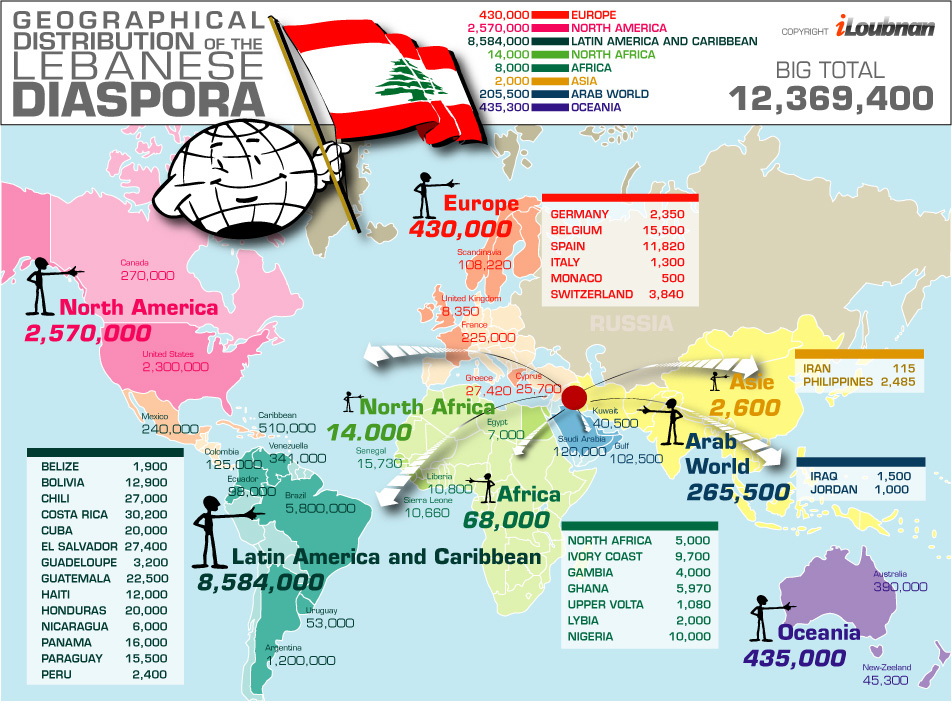

Bibliography
- Moosa, Matti (2005). The Maronites in History. New York: Gorgias Press. ISBN 1-59333-182-7.
- Mourkazel, Joseph (15 December 2020). "Maronite Christians". In Raheb, Mitri; Lamport, Mark A. (eds.). The Rowman & Littlefield Handbook of Christianity in the Middle East. Rowman & Littlefield. ISBN 978-1-5381-2418-5. Retrieved 23 March 2025.